


Share this Story
Habitat Heroes Plant Pollinator Garden During Earth Week
Partnership with the Virginia Zoo creates new native wildlife habitat on campus
University News | April 27, 2026
View Earth Day Bash Photo Gallery
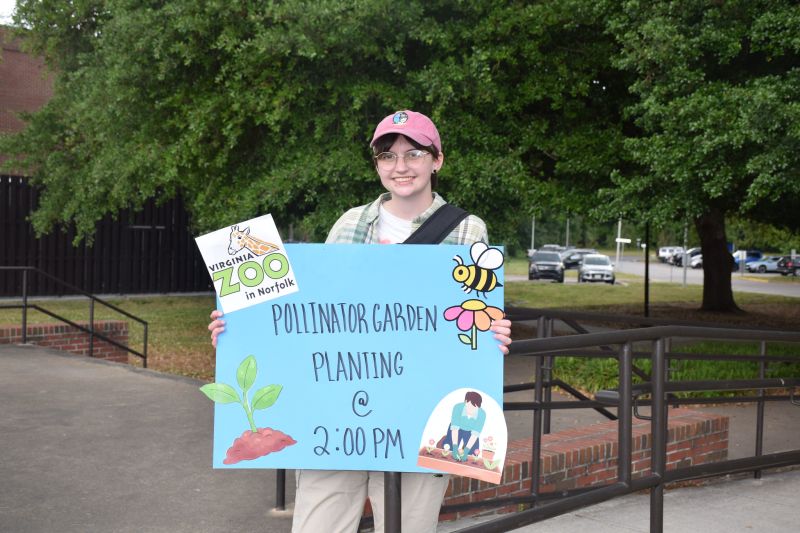 During Earth Week, Virginia Wesleyan University took a meaningful step toward strengthening its commitment to environmental stewardship with the installation of a native pollinator garden on campus—an initiative rooted in collaboration, education, and community engagement. Led by Director of Civic Engagement and Service Learning Arin Shatto, the project grew out of a newly established partnership with the Virginia Zoo. Through the Zoo’s Habitat Heroes program, students, faculty, and staff worked alongside horticulture experts to design and plant a garden that will support native pollinators and enhance biodiversity on campus.
The planting took place April 24 as part of the Marlins Earth Day Bash, the culminating event of Earth Week celebrations. Held outside the Greer Environmental Sciences Center, the Bash brought together campus and community members for a lively afternoon of interactive activities, service projects, and educational programming. Hosted by Marlins Go Green in partnership with Wesleyan Engaged, the event highlighted the University’s shared commitment to sustainability.
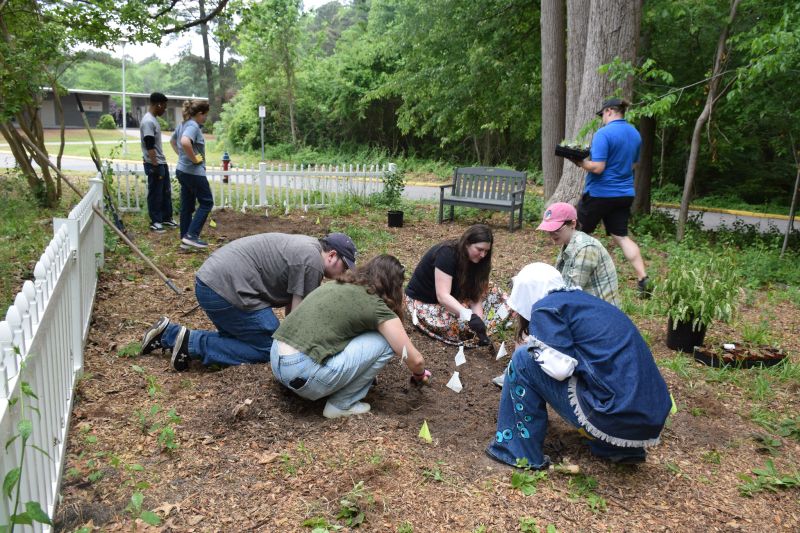 Located across from the campus greenhouse, the new pollinator garden is more than a beautification effort, it is an ecological investment. By incorporating native plant species, the garden will attract and sustain pollinators such as bees, butterflies, and hummingbirds, helping to counteract the loss of natural habitats across coastal Virginia.
“Much of Virginia’s natural landscape, especially in Hampton Roads, has been urbanized or replaced,” said student worker Elliot Fylstra, who played a key role in planning Earth Week events and coordinating the project. “Spaces like this garden act as an island for pollinators to gather and rest, while also increasing biodiversity on campus.”
The partnership with the Virginia Zoo, established late last fall, has already created new opportunities for student involvement. From March through May, the Office of Civic Engagement and Service Learning has coordinated volunteer experiences with the Zoo’s horticulture team, allowing students to gain hands-on experience while contributing to regional conservation efforts.
Fylstra, an Earth and Environmental Science major with a minor in biology (Class of December 2026), described the project as both educational and empowering. “I’ve taken a leadership role in planning Earth Week events and working with our partners at the Zoo,” they said. “Seeing how much thought goes into designing a sustainable garden—from sun exposure to plant selection—has been incredibly valuable. It’s shown me that meaningful change starts when people take initiative.”
Sustaining the garden will be a collaborative effort. The Office of Civic Engagement and Service Learning plans to engage student volunteers, faculty, staff, and community partners in ongoing maintenance, seasonal plantings, and long-term planning to maximize both ecological impact and campus enjoyment.
“Our partnership with the Virginia Zoo reflects community engagement in action,” said Shatto. “It brings together organizations with shared values to create meaningful, mutually beneficial change. I’m proud to have worked alongside our students, faculty, staff, and Zoo partners on this project, and I look forward to seeing how the garden grows and evolves.”
Looking ahead, the partnership is expected to expand with additional volunteer opportunities, on-campus programming, and environmental education initiatives. Beyond its immediate environmental benefits, the collaboration also serves as a platform for student leadership and professional development.
For Fylstra, the project underscores an important lesson: “Our campus does a lot to support sustainability, but there’s always room to grow. If students want to see more green spaces or native habitats, they have to be part of making it happen.”
With the planting complete and a plan for continued care in place, the Habitat Heroes pollinator garden stands as a living symbol of what can be achieved when community, education, and environmental responsibility come together.
Learn more about Wesleyan Engaged.